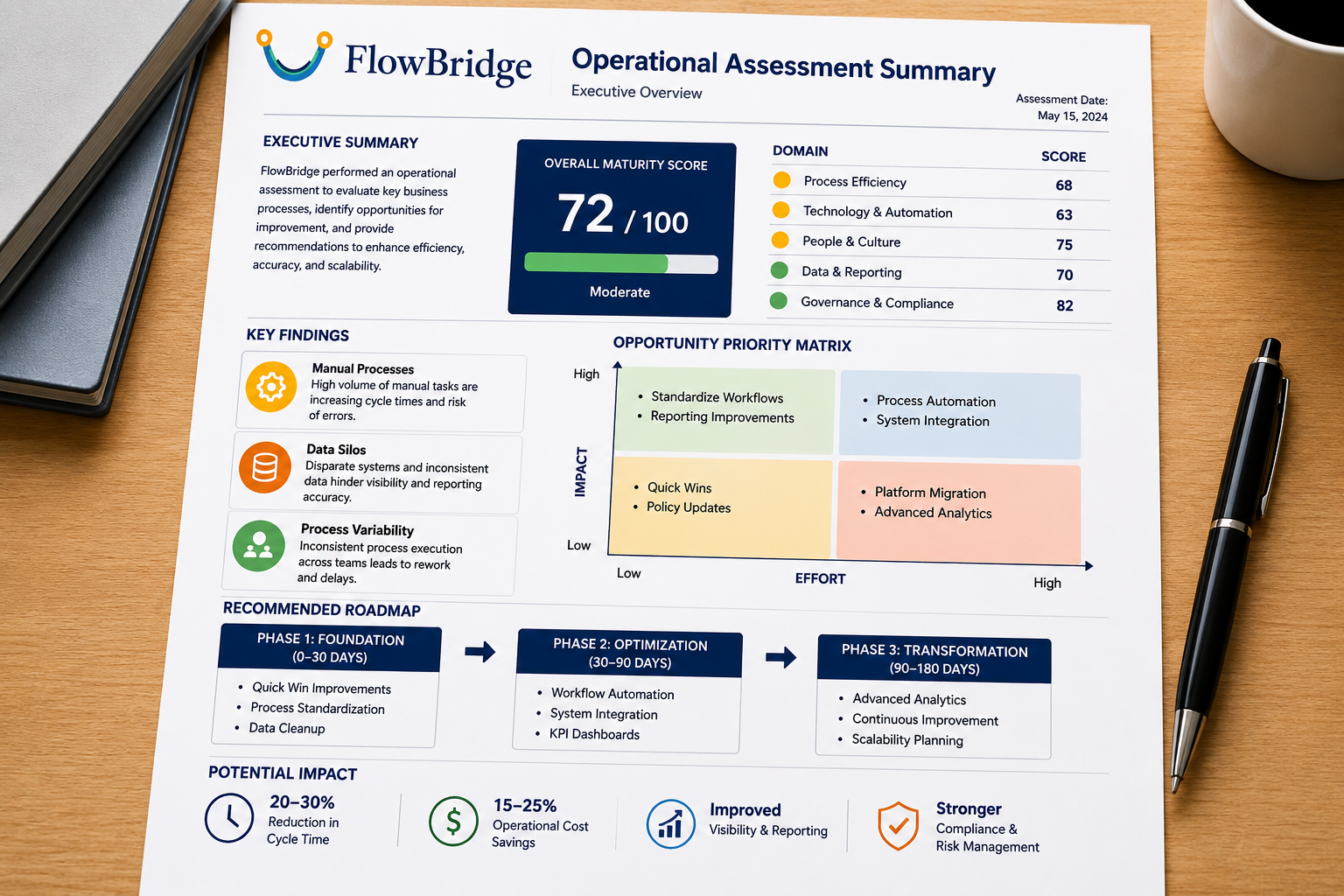
Operational clarity starts with understanding where the friction actually exists.
FlowAudit is a structured operational assessment framework designed to identify workflow breakdowns, visibility gaps, compliance risks, manual dependencies, and operational strain across critical healthcare service workflows.
Internal controls, record retrieval, audit preparedness, regulatory oversight.
What FlowAudit Looks For
The assessment looks beneath surface symptoms.
FlowAudit evaluates how work actually moves across people, systems, handoffs, documentation, and operating rhythms. The goal is to identify which operational issues are creating the most friction and which improvements are most practical to pursue first.
workflow breakdowns and bottlenecks
unclear ownership and handoff gaps
manual tracking and spreadsheet dependencies
visibility gaps and weak reporting cadence
compliance exposure and audit readiness strain
automation opportunities grounded in real workflow
A clear summary of friction points, risk areas, and workflow issues observed during discovery.
Performance Scorecard
A domain-level view of operational maturity, strain, visibility, and readiness.
Improvement Roadmap
Suggested sequencing for immediate stabilization, near-term improvements, and longer-term optimization.
Executive Debrief
A structured review of findings and recommended next steps with leadership stakeholders.
Why FlowAudit Is Different
Built around operational reality, not theoretical maturity models.
FlowAudit focuses on practical execution, operational sustainability, workflow clarity, realistic adoption, and measurable improvement opportunities.
The earlier operational friction is identified, the easier it becomes to fix.
If your teams rely on manual follow-up, disconnected workflows, tribal knowledge, or reactive problem solving, FlowAudit can help identify the underlying gaps.